
Digital interference related to the 2027 French presidential election is already documented. Manipulation is no longer limited to deepfakes: authentic images taken out of their original context are circulating with falsified dates or locations. Verifying that a photo is “real” is no longer enough; its source, publication date and the context in which it was produced must also be checked. This shift is changing the very nature of the daily analysis of French and international news.
Algorithmic bias in AI assistants during election periods
The question is not whether voters will use AI assistants to learn about political platforms, but how these tools rank the answers they provide. An article published on October 22, 2026, describes two distinct uses ahead of 2027: campaign teams producing political content, and voters turning directly to conversational assistants to compare candidates.
The technical problem is clear. No AI assistant discloses the exact weighting of its political sources. A voter who asks a chatbot about a candidate’s tax policy receives a summary without knowing its editorial origins. Training data, moderation filters and commercial partnerships with certain media outlets shape the response, while users have no way to audit the process.
For readers accustomed to following Les 4 Vérités news, this lack of transparency creates a tangible problem: the diversity of editorial viewpoints disappears behind a single answer presented as neutral. There is still no standardized mechanism requiring AI providers to display their primary sources in an electoral context.
European platform regulation and the French electoral calendar
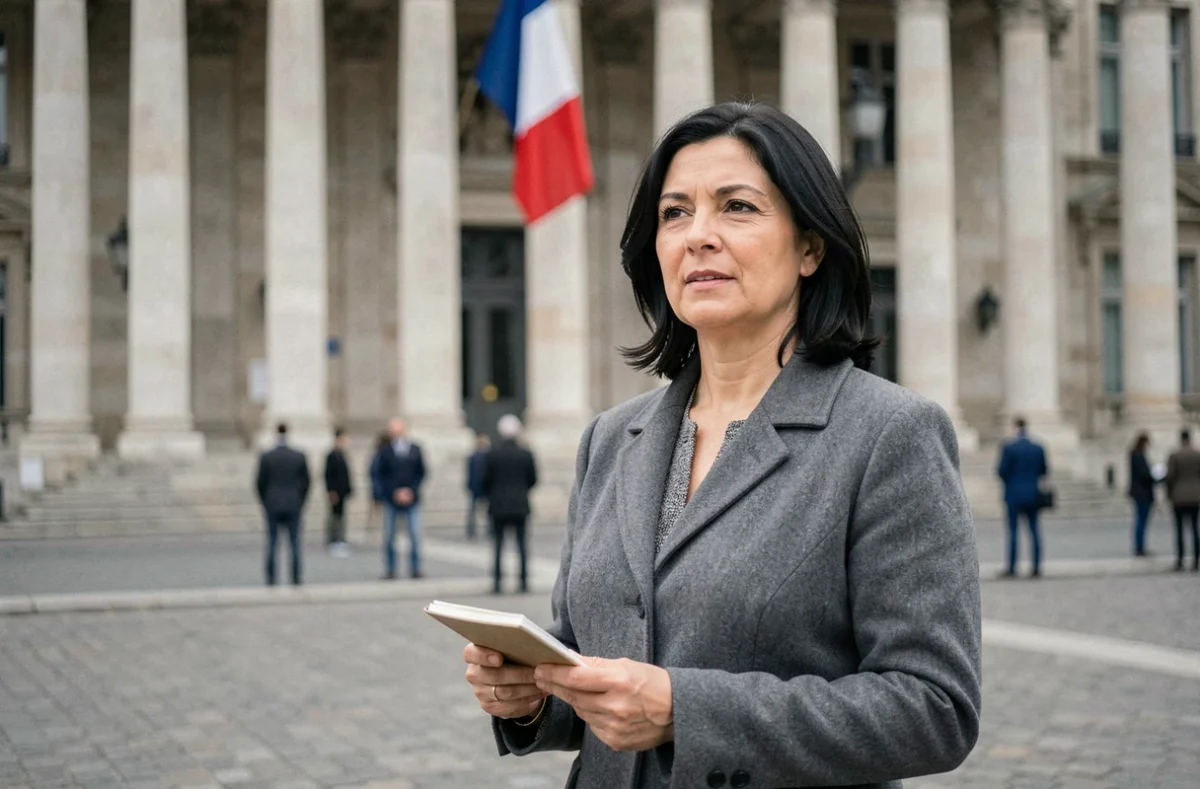
European regulation of platforms and AI is a tangible democratic issue as France enters the electoral period. The Digital Services Act requires very large platforms to be transparent about their recommendation systems. The AI Act, whose first binding provisions are gradually coming into force, classifies AI systems used in an electoral context as high-risk applications.
The gap between the European regulatory timetable and the French electoral calendar creates a grey area. Not all the algorithmic transparency requirements set out in the AI Act will be in force before the first round. Platforms can technically comply with the DSA without making it clear how their recommendation algorithms rank political content.
What the regulatory framework does not yet cover
Several gaps remain in the current framework:
- Conversational assistants are not classified as platforms under the DSA, exempting them from the algorithmic transparency requirements imposed on social networks.
- There is no harmonized technical definition of “political content” among national regulators, making automated detection of manipulation more difficult.
- Under current French electoral law, AI-generated campaign content is not subject to any specific labeling requirements.
We find that public debate focuses on video deepfakes, even though the main risk lies in taking real images out of context. An authentic photo of a candidate shared with a misleading caption evades synthetic-image detection tools.
Visual decontextualization and source verification
Newsrooms that analyze international news every day face a renewed operational challenge. Verification is no longer limited to establishing whether a document is authentic; it must cover its entire distribution chain: who first published it, when, and with what narrative framing.
A real image can be more misleading than a deepfake if it is taken out of its geographical or temporal context. A photograph of a protest taken in one country and reused to illustrate an event in another will not trigger any alerts from generative AI detection systems. Technical filters are blind to this kind of manipulation.
A verification method readers can use
Voters and regular news readers can follow a basic protocol:
- Run a reverse image search (Google Images, TinEye) to identify the earliest online appearance of an image.
- Check the EXIF metadata, when available, for information about when and where the photo was taken.
- Always cross-check visual information against at least two reputable news sources before sharing it on social media.
This protocol cannot guarantee infallibility, but it significantly reduces the risk of unintentionally spreading misleading content. Verification is becoming a civic skill, not just a journalistic one.

Geopolitical stakes and information warfare
Influence operations documented around French elections are part of a broader geopolitical context. The war in Ukraine has accelerated the professionalization of disinformation campaigns targeting European democracies. The techniques combine fake account creation, algorithmic amplification and the exploitation of existing social divisions.
Generative AI lowers the cost of producing these campaigns. Operators can now produce thousands of text and image variations tailored to specific audience segments, in multiple languages, at minimal additional cost. The cost-effectiveness of influence operations has shifted in favor of attackers.
The response cannot be purely technological. Fact-checking initiatives, platform transparency requirements and media literacy form a three-part approach, none of whose elements works in isolation. The daily analysis of French and international news must now incorporate this information dimension as a constant lens, alongside economic and diplomatic analysis.