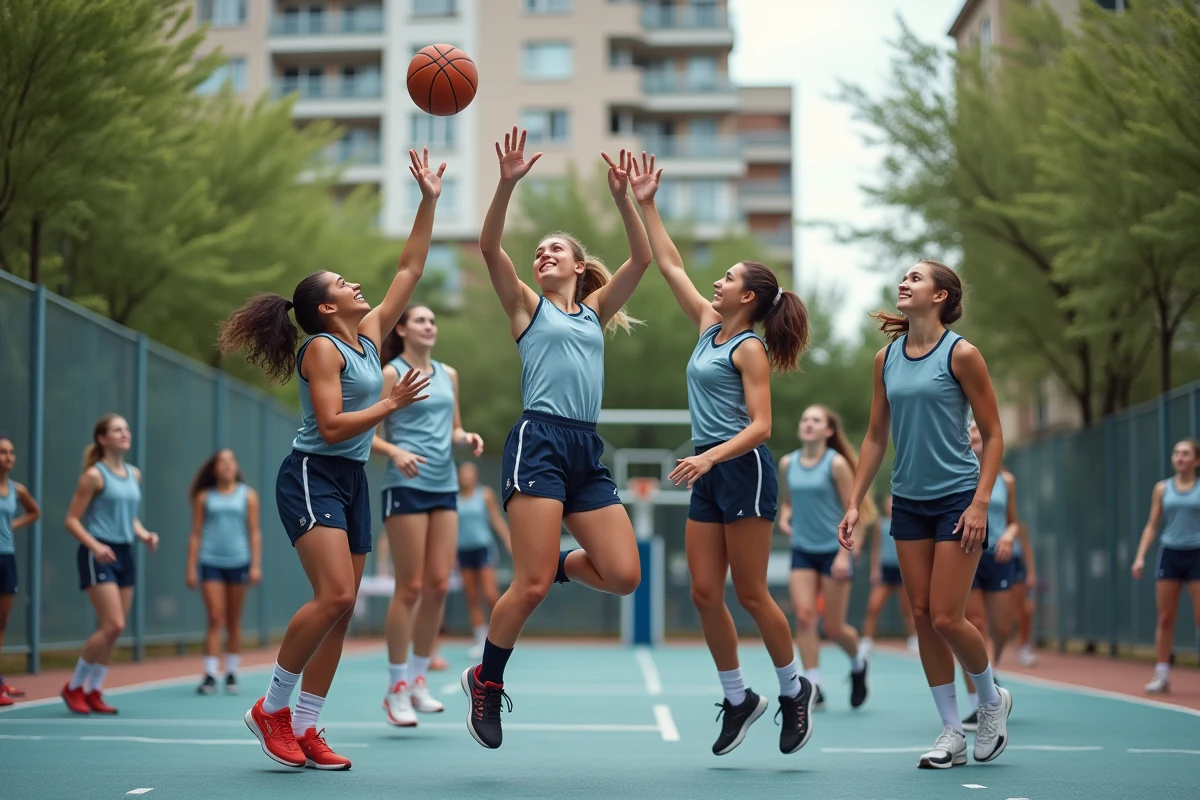
In 2026, the average height of women in France will exceed 1.66 meters for the first time, according to the latest projections from INSEE. This gap, still significant compared to the male average, subtly but concretely alters the selection criteria for athletes in several disciplines.
However, the standards for equipment, performance grids, and access conditions to elite pathways remain based on male standards or outdated norms. This discrepancy fuels persistent disparities in the practice and recognition of women’s sports.
The average height of women in France in 2026: mere data or a true indicator of the challenges facing women’s sports?
The threshold of 1.65 meters, announced for 2026 by INSEE and Santé Publique France, is not just a number. It serves as a revealing factor, highlighting the tension between fixed sports norms and the reality of the female body today. Body morphology is not limited to spreadsheet data: it determines access to sports, influences performance, health, and shapes the image of female athletes. Yet, many approved sports equipment are still designed based on male models.
In gyms, on fields, and in courts, adjustments are slow to come. Athletes train with poorly adapted accessories, leading to discomfort or avoidable injuries. This is evident on the field: a sports bra that does not provide support, an oversized ball, hurdles modeled on male heights. Over time, this incongruity slows the progress and development of female practitioners, whether professional or not.
The rise in average BMI (23.5 kg/m² in 2026) also illustrates the transformation of lifestyles and the impact of physical activity. But the real question lies elsewhere: how does French sport align with these changes? It is no longer enough to make do: we need to rethink equipment, training methods, and access policies. The page the average height of women in France 2026 highlights this need for deep adaptation, whether it involves redesigning infrastructures or recognizing female specifics at the elite level.
For younger generations, seeing athletic role models who resemble them becomes a powerful driver of engagement and, more broadly, public health. Behind the statistics, there are human trajectories. The numbers pose choices, and these choices commit.
What differences and similarities persist between women’s and men’s sports in light of evolving morphologies?
International federations still rely on standards inherited from male profiles to dictate regulations and equipment. While the average height of women in France approaches 1.65 meters in 2026, that of men remains higher, influencing the architecture of infrastructures and selection criteria. Nevertheless, female participation is gaining strength: COSMOS indicates that 40% of licensed members in sports clubs across France are women that year. Girls and young women are engaging in sports, but still face systems that are often poorly adapted to their morphology.
Here are some points illustrating the similarities and differences that persist:
- Similarities: the pursuit of performance, the rigor in training, and concerns about bone strength or nutritional balance apply to everyone. Whether in individual or team sports, regular practice remains beneficial for the health of all.
- Differences: managing the menstrual cycle or energy deficiency is specific to female athletes. Gender stereotypes continue to weigh on governance, with barely 11% of women in leadership positions within sports organizations. Finally, much equipment, designed for male physiques, forces female athletes to constantly adapt.
The media coverage of women’s sports is growing, driven by competitions like the Women’s Euro Football Championship or the Women’s Rugby World Cup, which attract large audiences. This visibility encourages the emergence of inspiring role models: Pauline Ferrand-Prévot, for example, embodies the diversity of body types in cycling. Despite this, media coverage still lags behind that of men. Female athletes are seeking recognition proportional to their commitment and the evolution of morphotypes.
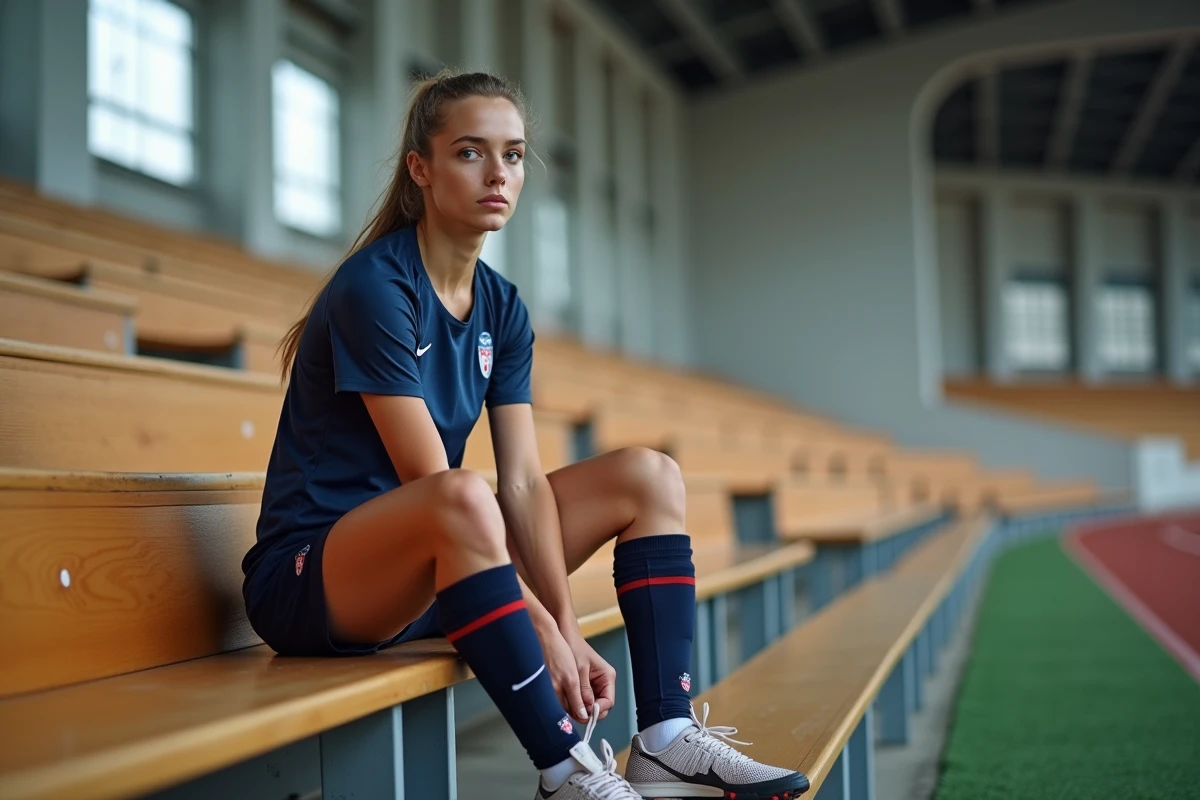
Towards a more inclusive sport: rethinking equipment, training, and athlete recognition
The average height of women in France reaches 1.65 meters in 2026, according to INSEE and Santé Publique France. This figure, far from trivial, calls for a reevaluation of the design of sports equipment. For years, the male norm has dictated the shape of shoes, the height of hoops, and the cut of jerseys. As a result, female athletes often have to make do, frequently at the expense of their comfort or performance. Federations are slow to generalize equipment that is truly adapted to the morphology of French female athletes.
Three criteria now guide the choice of women’s sports equipment:
- Comfort becomes the primary requirement, whether for training clothes or technical lingerie.
- Material and support, with bras and sports bras designed for physical activity, take precedence over purely aesthetic considerations.
- Price remains a barrier, especially for younger athletes, who prioritize functionality.
Personalization is gaining ground: brands are opening up to the idea of offering outfits tailored to each morphology. Instagram and TikTok, which have become showcases for female athletes, promote the expression of this bodily diversity and encourage investment in better-designed equipment. The “Sport Féminin Toujours” campaigns supported by Arcom, along with institutional initiatives, work to enhance the presence of women in the media and to value their expertise.
The recognition of athletes is advancing, driven by increased visibility and the mobilization of committed stakeholders. Female athletes are stepping up to demand suitable conditions. An assertive, unique women’s sport is gradually establishing itself in the French landscape, without compromising on high-level demands. The momentum is underway: with every centimeter gained, the realm of possibility expands.