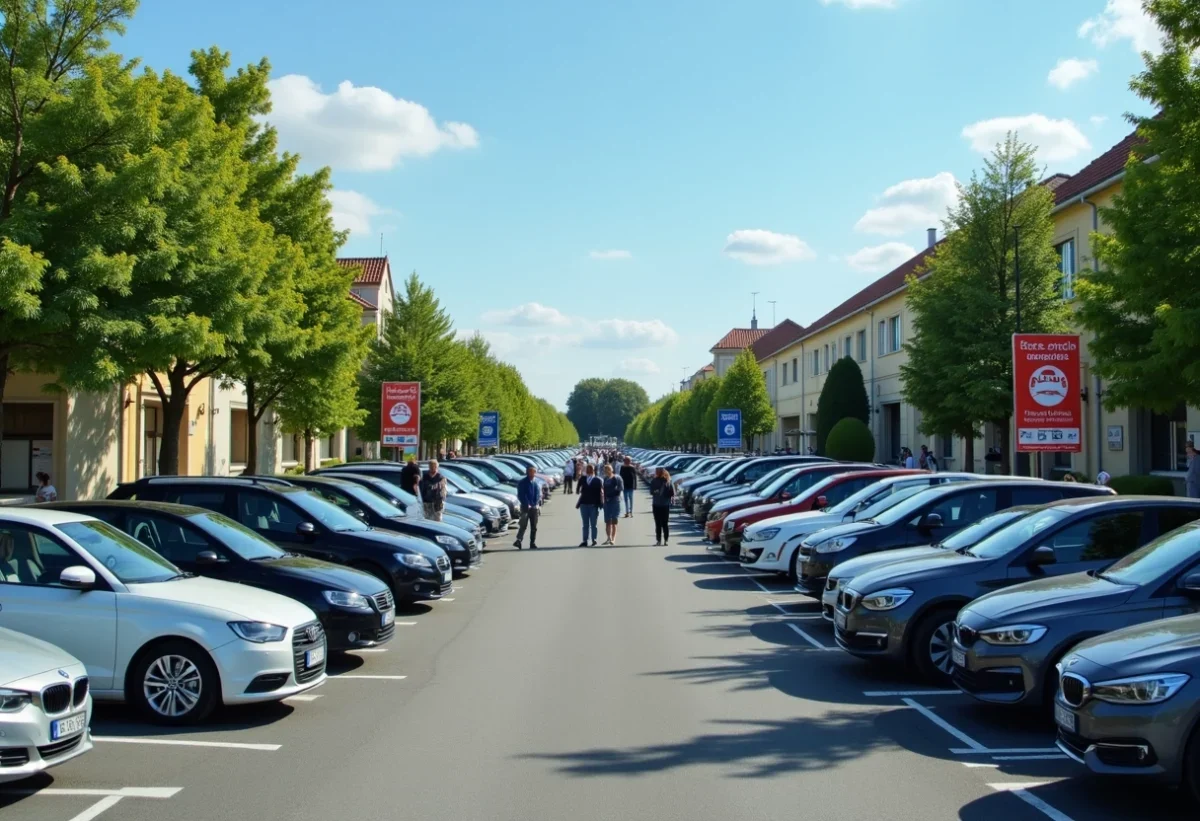
CO₂ emissions represent a major challenge for France. To address this, the government is relying on various strategies, including the development of carpooling parking lots. These dedicated spaces are designed to encourage drivers to share their daily commutes, thereby reducing the number of vehicles on the roads.
The establishment of these parking lots in peri-urban and rural areas facilitates access to carpooling, making this option more practical and appealing. By decreasing road traffic, this initiative significantly contributes to the reduction of greenhouse gas emissions while providing an economical and ecological alternative to individual travel.
French initiatives to reduce CO₂ emissions
The French government is multiplying initiatives to promote carpooling and reduce CO₂ emissions. In 2023, several aids were put in place to encourage this practice. Among them, the National Daily Carpooling Plan, launched on December 13, 2022, aims to promote carpooling over short distances. This ambitious program has the goal of tripling the number of carpooling trips by 2027.
To support this dynamic, the government introduced the €100 bonus on January 1, 2023. This financial aid is aimed at drivers who start carpooling for short distances, thus encouraging them to adopt more sustainable mobility behaviors. The Sustainable Mobility Package, for its part, allows employers to cover part of the commuting trips made by carpooling, thereby strengthening economic incentives for employees.
Ademe (Agency for Ecological Transition) also plays a key role in the development of carpooling. By supporting innovative projects and providing data on mobility practices, the agency contributes to the rise of more ecological transport solutions. Initiatives like the Vinci Autoroutes La Chapelle-Saint-Mesmin carpooling parking perfectly illustrate this desire to develop suitable infrastructures to facilitate ride-sharing.
These joint efforts by the government, businesses, and local actors are part of a broader strategy for ecological transition, aimed at reducing the carbon footprint of daily commutes.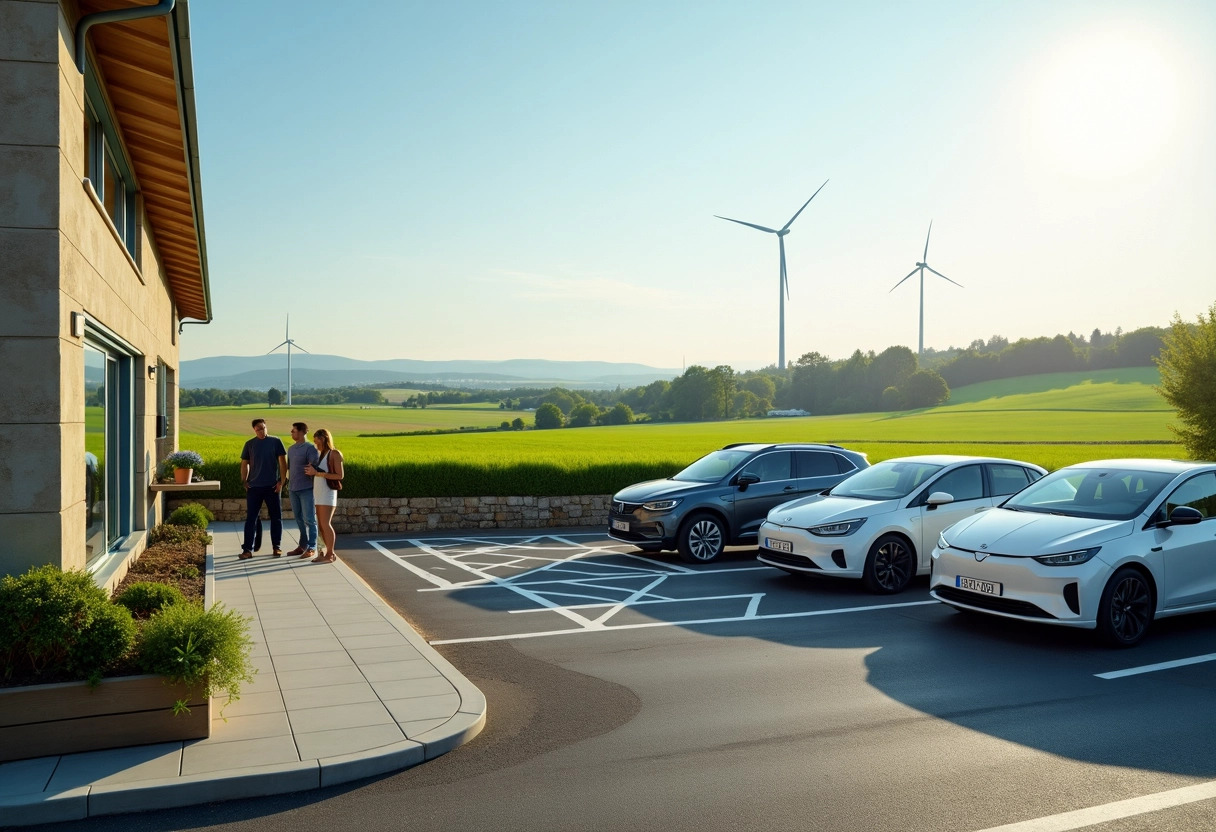
The role of carpooling parking lots in ecological transition
Carpooling parking lots prove to be strategic infrastructures in the fight against CO₂ emissions. They help reduce the use of individual vehicles by facilitating ride-sharing between drivers and passengers. The establishment of these parking lots aims to encourage more sustainable mobility and optimize the use of urban space.
The benefits of carpooling parking lots:
- Reduction of urban congestion
- Decrease in public costs for communities
- Improvement of air quality
- Concrete example of territorial solidarity
These dedicated parking spaces not only increase the purchasing power of users through shared travel costs but also promote a better quality of life in urban areas. Carpooling, by encouraging shared trips, thus becomes a major lever for ecological transition.
Ademe, by supporting the creation of these infrastructures, contributes to the reduction of greenhouse gas emissions. Initiatives like the Vinci Autoroutes La Chapelle-Saint-Mesmin carpooling parking perfectly illustrate this dynamic. These parking areas are designed to be easily accessible and to offer services tailored to the needs of users.
The establishment of carpooling parking lots is part of a broader strategy for sustainable mobility, aimed at encouraging environmentally friendly transport practices. These infrastructures, by facilitating vehicle sharing, help reduce the carbon footprint of daily commutes and effectively combat air pollution.