Toys, clothing, and childcare items for children represent an expense that renews every six months, sometimes even faster. Finding smart prices in these categories requires understanding the supply chains, applicable standards, and quality trade-offs that make the difference between a good deal and a risky purchase.
Compliance of second-hand toys: what the CE marking really requires
A resold toy is still subject to the same safety obligations as a new toy. The CE marking, identification of the manufacturer, age warnings, and information in French must be present on the product or its packaging. A simple “not suitable for children under 3” pictogram crossed out is not enough to dismiss the requirements when the toy is clearly intended for toddlers.
We observe that the majority of individual sellers are unaware of these constraints. On peer-to-peer resale platforms, no compliance checks are carried out before listing. The risk lies in small detachable parts, paints containing endocrine disruptors, and cords that exceed regulatory length limits.
Before buying a second-hand toy for a child under 36 months, we recommend checking three points: the presence of the CE marking on the toy itself (not just on the original packaging), the absence of broken parts or cracks exposing the inner foam, and the legibility of age warnings. Soft plastic toys made before restrictions on phthalates require particular vigilance.
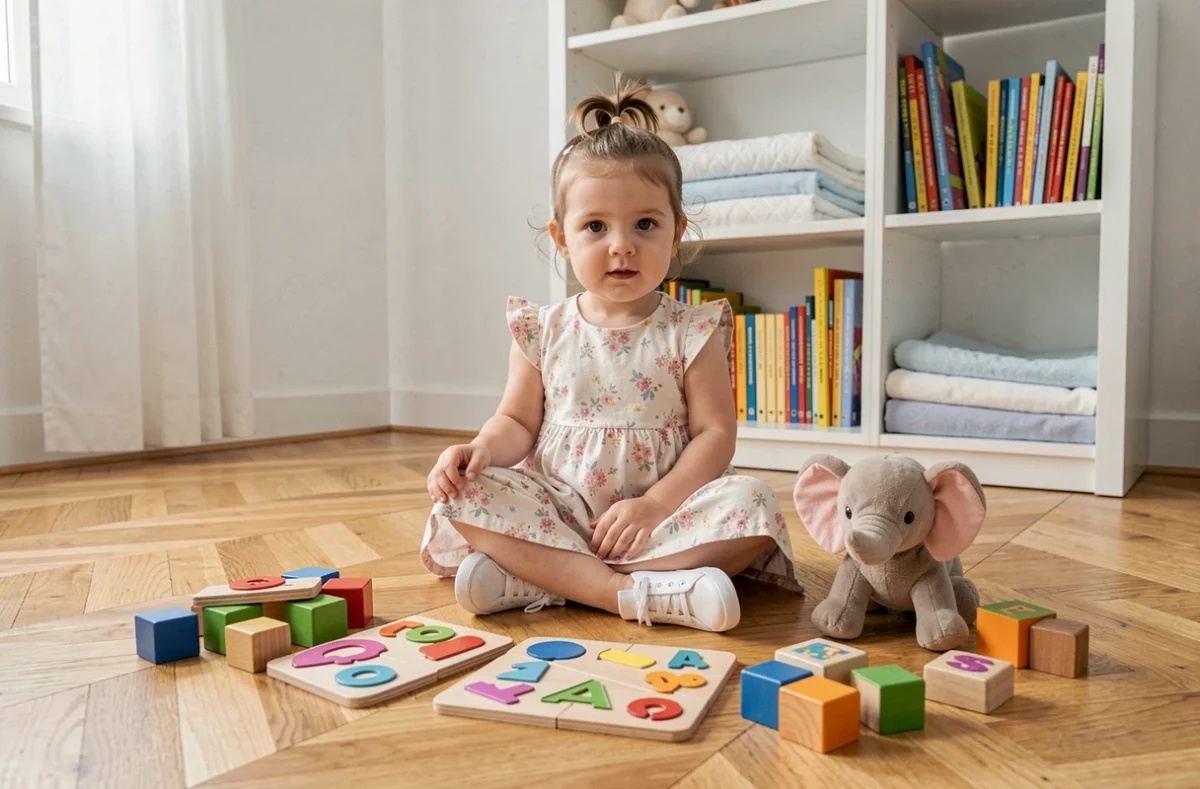
To build a stock of toys and clothing at smart prices while maintaining control over quality, online retailers like kidits.fr allow for easy filtering by age, childcare category, and budget, which reduces the time spent sorting through unverified listings.
Second-hand children’s clothing: in-store second-hand is growing faster than C2C
The 2025 data from Refashion confirms a clear trend: in-store second-hand sections are growing faster than peer-to-peer exchanges. For children’s clothing, this dynamic changes the game. Availability is immediate, sorting is done beforehand, and the condition of the product can be verified on-site.
The French market for second-hand clothing, shoes, and household linen has grown in volume and value in 2025, while remaining a minority in total consumption. This means that the second-hand children’s offer is becoming more professional without saturating the channels.
Logistical consolidation explains part of the environmental impact gap between channels: a physical consignment store shares transportation, whereas each parcel shipped by an individual generates its own carbon impact. For parents looking for smart-priced children’s clothing, going through a specialized consignment store or a children’s thrift shop offers a better cost/environmental impact ratio.
Childcare items: the pitfalls of low prices on car seats and strollers
Heavy childcare items (car seats, strollers, travel cribs) are subject to safety standards that evolve regularly. A car seat compliant with regulations at the time of manufacture may no longer be compliant after a regulatory update. Product traceability is the primary purchasing criterion, before price.
- Car seats: check the standard indicated on the approval label (a seat without a readable label should not be used), the absence of previous impact (an accident-damaged seat loses its protective properties even without visible damage), and the date of manufacture
- Strollers: check the braking system, wear on the harness straps, and stability of the folded/unfolded chassis, as locking mechanisms degrade over time
- Travel cribs: measure the spacing of the bars (which should not allow the passage of an infant’s head) and check the condition of the provided mattress, which is often too thin after several years of use
A childcare item with an unknown history poses a greater risk than the savings made. Specialized consignment stores generally perform a condition check before putting items on the shelf, which justifies a slightly higher price than a listing between individuals.
New toys at reduced prices: identifying the real levers for lowering costs
The catalog price of a toy includes several components that parents often underestimate: the license (character, franchise), packaging, and last-mile logistics. For a toy sold for under ten euros, the license can represent a significant portion of the final price.
Buying children’s toys at smart prices doesn’t only involve second-hand items. Three levers can help reduce the bill on new items:
- Favor brands without licenses: a generic building set offers the same play value as a licensed product, for a fraction of the price
- Consolidate purchases to reach free shipping thresholds, a factor that can disproportionately increase the cost on small baskets
- Watch for clearance sales outside holiday periods, when retailers liquidate outgoing references to free up warehouse space
Online sales of toys and children’s items allow for price comparisons across multiple sites in just a few minutes. Specialized childcare sites often offer selections by age group, which saves time on unsuitable items.
Second-hand children’s textiles: what really wears out and what holds up
Not all children’s clothing is equal in the second-hand market. Cotton bodysuits and pajamas lose their elasticity faster than other wardrobe pieces. Coats and puffer jackets, on the other hand, retain their thermal properties much longer, provided the filling has not been permanently compressed.
Walking shoes for children under three should never be bought second-hand. The sole deforms according to the foot shape of the child who wore them, which can affect walking development.
For the rest (jeans, dresses, T-shirts, jackets), second-hand remains the most rational channel. A child’s garment is worn for a few months before becoming too small, which leaves little time for wear to manifest. The frequency of renewal alone justifies the use of second-hand for the majority of the wardrobe.
The market for toys, clothing, and childcare items at smart prices is structured around two axes: product safety and budget optimization by purchasing channel. Parents who combine selective second-hand shopping with reasoned new purchases meet their children’s needs without compromising on quality or their budget.