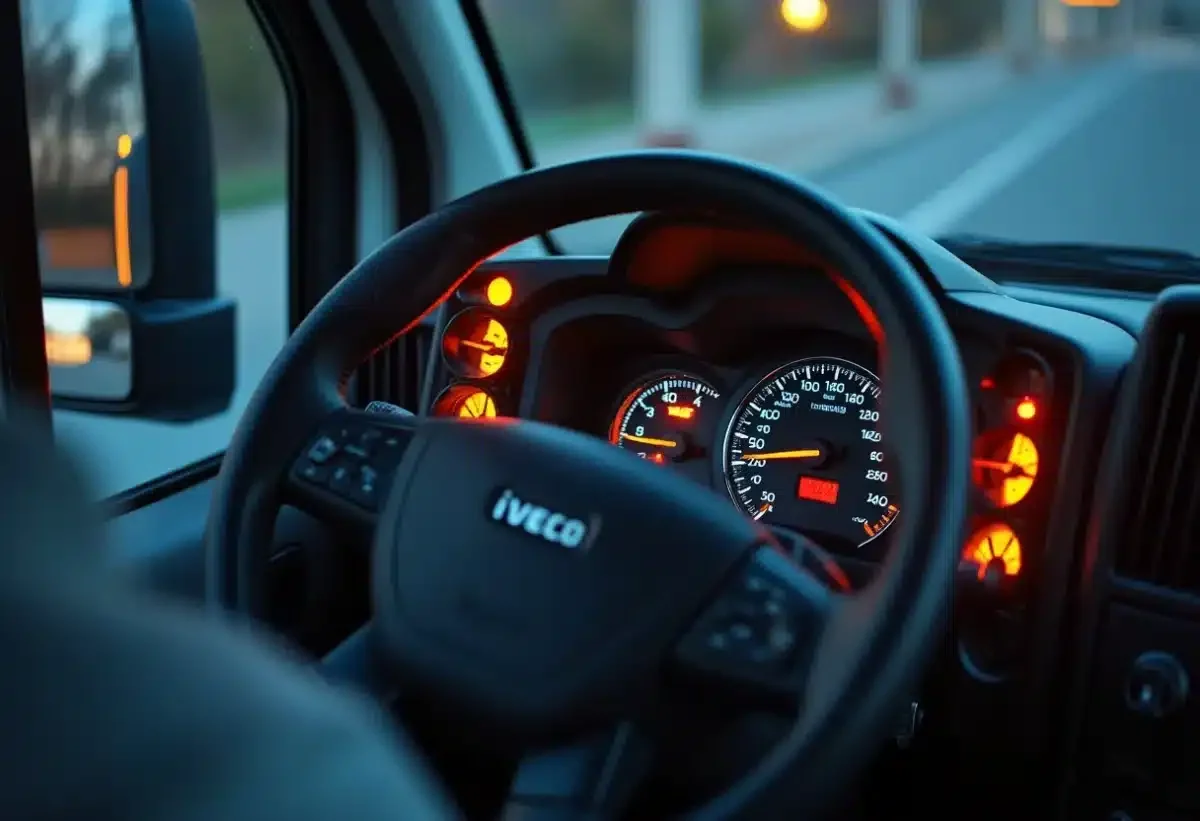
Utility vehicle drivers, such as those of the Iveco Daily, must pay special attention to the signals on their dashboard. This model, valued for its robustness and versatility, is also equipped with a sophisticated monitoring system.
Understanding these signals can prevent many mechanical issues and ensure optimal vehicle lifespan. For example, the engine temperature icon indicates a risk of overheating, while the oil pressure light signals lubrication problems. Careful reading of these indicators is essential to guarantee safety and performance on the road.
The different lights on the dashboard of the Iveco Daily model and their meanings
Understanding the various lights on the Iveco Daily dashboard is fundamental for any professional driver. Here is a list of the main lights and their meanings.
-
Engine oil pressure light
Represented by an icon in the shape of an oil can. This light turns red when the oil pressure in the engine is insufficient. Low oil pressure can cause serious damage to the engine.
-
Coolant temperature light
Represented by an icon in the shape of a thermometer submerged in liquid. This light turns red if the coolant temperature is too high. Engine overheating can lead to immediate failure if not addressed in time.
-
Parking brake light
Represented by an icon in the shape of a letter “P” encircled. This light turns red when the parking brake is engaged. You must ensure that this light turns off before starting the vehicle to avoid potential damage to the braking system.
-
Battery charge system light
Represented by an icon in the shape of a battery with a “+” and a “-“. This light turns red if the battery charging system is faulty. A discharged battery can render the vehicle unusable.
-
Engine maintenance light
Represented by an icon in the shape of a wrench. This light turns orange when the engine needs maintenance. Ignoring this light can reduce the engine’s lifespan and increase the risk of breakdowns.
-
Pollution control system light
Represented by an icon in the shape of exhaust gases. This light turns orange when a problem related to the pollution control system is detected. A failure of the pollution control system can not only increase harmful emissions but also lead to fines during road checks.
These lights are part of the Iveco Daily light list and it is imperative to monitor them regularly to keep the vehicle in good working condition.
Actions to take when lights are activated
When a light comes on the dashboard of your Iveco Daily, you must react promptly. Here are the recommended actions for each type of light:
-
Engine oil pressure light
Consult a professional immediately. Turn off the engine as soon as possible to avoid serious damage. Low oil pressure may indicate a leak or a problem with the oil pump.
-
Coolant temperature light
Stop the vehicle and let the engine cool down. Do not attempt to open the radiator cap while the engine is hot. Consult a professional for a detailed diagnosis.
-
Battery charge system light
Consult a professional as soon as possible. This light indicates that the battery is not charging properly, which may be due to a problem with the alternator or the belt.
-
Engine maintenance light
Consult the vehicle manual for the steps to follow. This light signals that regular maintenance is necessary to prevent potential breakdowns.
-
Pollution control system light
Consult a professional. This light indicates a problem with the pollution control system, which can affect vehicle performance and increase harmful emissions.
For a detailed interpretation of dashboard signals, refer to the documentation provided by the manufacturer.