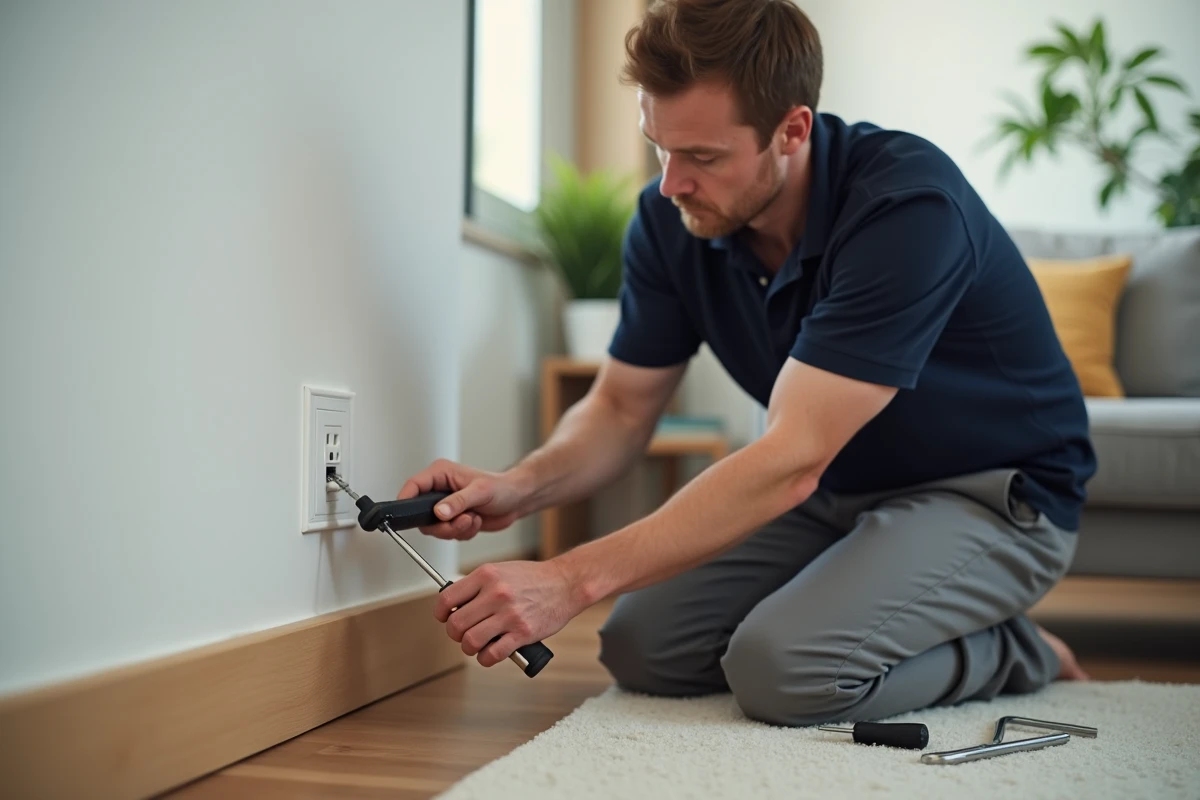
A cut circuit breaker does not always indicate the actual stop of current from an outlet, especially after years of DIY work behind the walls. At Schneider, many recent models rely on powerful snap-in fastening systems, which require a rigorous method: disassembly allows for no improvisation. The slightest wrong move could render the entire mechanism out of service.
Safety imperatives leave no room for approximation here. A careless gesture can jeopardize the safety of the entire circuit. Information and preparation are the two pillars of an intervention that ends without the slightest fear.
What you need to know before disassembling a Schneider outlet: safety and preparation
Disassembling a Schneider electrical outlet is not a simple technical gesture. It is essential to establish a real routine of vigilance: take the time to cut the power directly at the electrical panel and clearly identify the circuit breaker of the targeted electrical circuit. Never rely on appearances: the absence of noise or a room plunged into darkness is not sufficient; only a current tester or a multimeter can confirm the absence of voltage.
Before diving into the heart of the matter, clear the area around the outlet and have the recommended tools ready: insulated gloves, the appropriate screwdriver, wire stripper, and cutting pliers. Nothing is accessory; the rules of the NF C 15-100 standard impose method from disassembly to re-commissioning. To know the precise order of necessary operations, this guide provides you with the steps to easily disassemble a Schneider outlet while avoiding damage to the mechanism or the wiring.
In every recent Schneider electrical outlet, you will encounter three essential wires: the live wire (often red, brown, or black), the neutral wire (blue), and the earth wire (yellow-green). Before touching anything, clearly identify them. Don’t forget to inform others present that the power will be cut. If there is any hesitation, a professional electrician remains the best option. By approaching each step methodically, you greatly reduce risks to the home electrical installation. Nothing is more effective than strict adherence to current standards to ensure the reliability of the intervention.
What are the steps to disassemble a Schneider outlet safely?
It all starts with removing the decorative plate with the correct screwdriver. This step, often rushed, conditions the next: forcing or hurrying the movement exposes you to breaking the plate or damaging the inner support. Once this hurdle is passed, the body of the electrical outlet is accessible.
Protect yourself by putting on your insulated gloves. Double-check the absence of voltage with a current tester or a multimeter, even if the circuit cut is recent. This double-checking is a habit to adopt, recommended by any professional electrician.
Next, unscrew the fastenings that hold the mechanism in the junction box (for recessed outlets) or the molding (for surface-mounted installations). Here, it is essential to gently remove the whole assembly without pulling on the wires. For guidance, the colors of the wires remain your reference:
- Live wire: usually red, brown, or black
- Neutral wire: blue
- Earth wire: yellow-green
Then loosen each conductor, carefully noting their placement for reconnection later in accordance with the NF C 15-100 standard.
On the most recent Schneider models, some mechanisms allow you to release the wires by simply pressing on automatic terminals (no tools required). On other more traditional models, each wire is held by a screw that must be loosened before extracting the wire from the terminal block. Step by step, tools within reach, and a clear environment: a minimum of organization ensures maximum safety.

Replacing or moving an outlet: practical tips and when to call a professional
Before making any modifications to a electrical outlet, conduct a thorough assessment: recessed outlet installed in a junction box (perfect for drywall), or surface-mounted outlet installed on molding or conduit (easier for renovations or on concrete). The technical choice always depends on the structure and the need.
To move an outlet, prefer the electric baseboard or the molding for a clean and protected cable passage. Before making any connections, remember: live (red, brown, black), neutral (blue), and earth (yellow-green) allow for no approximation.
Outdoor installations impose stricter criteria: always select an outlet with a protection index IP of at least 25, and ensure it is installed more than one meter above ground level. Among the useful precautions to keep in mind, here are the most common:
- Always install child protection devices on accessible outlets
- On circuits powering powerful appliances, check the maximum capacity supported as well as strict compliance with the NF C 15-100 standard
Whenever in doubt, with an old installation, unclear wiring logic, or uncertainty about regulations, contact a professional electrician. Their expertise remains the best guarantee of a reliable, durable network without unpleasant surprises. Whether for a replacement, renovation, or extension, it is better to recognize your limits than to play with your electrical installation.
Disassembling a Schneider outlet reveals the true face of your installation: sometimes reassuring, sometimes full of surprises. Rigor, method, and anticipation draw the line between serenity and electrical hassle. Often, safety comes through these small rituals that make invisible everything that works… even in the silence of the walls.