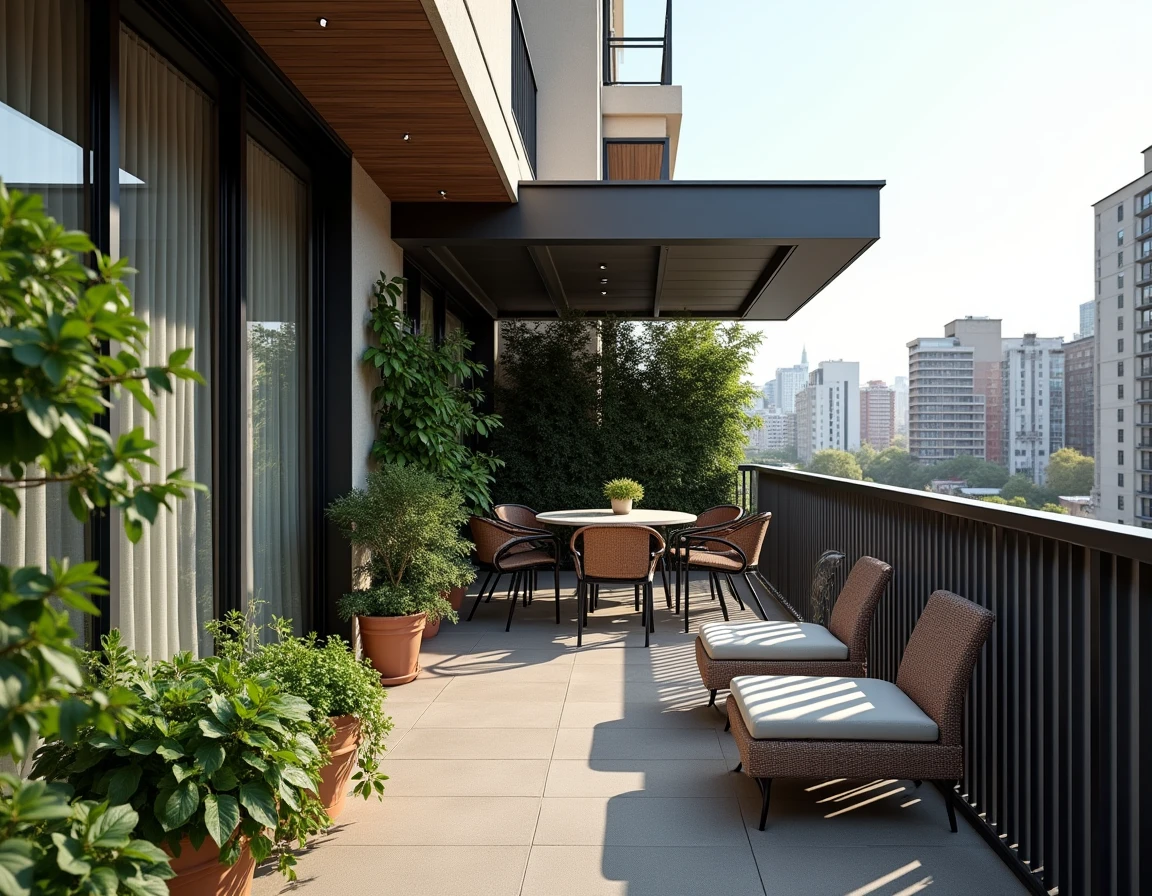
Protecting oneself from prying eyes from above poses a technical problem distinct from horizontal visibility: the angle of descent makes traditional side protections insufficient. We have selected ten devices based on their ability to block a downward gaze, their compatibility with natural light, and their mechanical resistance.
1. Vertical zip screen with micro-perforated fabric
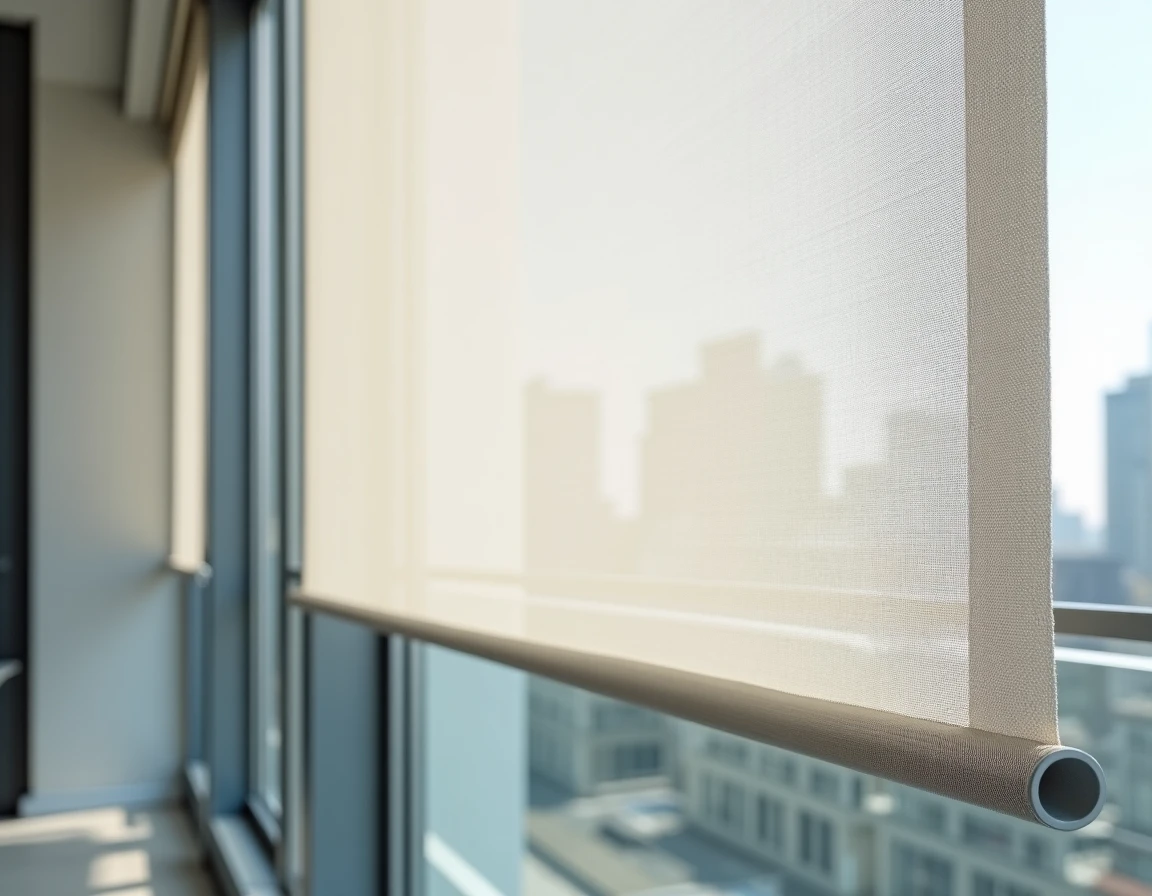
The zip screen remains the most direct response to descending visibility. Its micro-perforated fabric blocks the view from outside while preserving visibility towards the garden and allowing air circulation. We recommend this device as a priority because it combines obscuration, ventilation, and light maintenance in a single piece of equipment.
The lateral guidance by zip prevents flapping in the wind, a recurring flaw of traditional roller blinds. The screen fabric filters UV rays without darkening the room, which distinguishes it from opaque fabrics.
Among the solutions to protect from prying eyes, the zip screen adapts well to both sliding doors and pergolas, with motorization compatible with home automation.
2. Bioclimatic pergola with adjustable slats
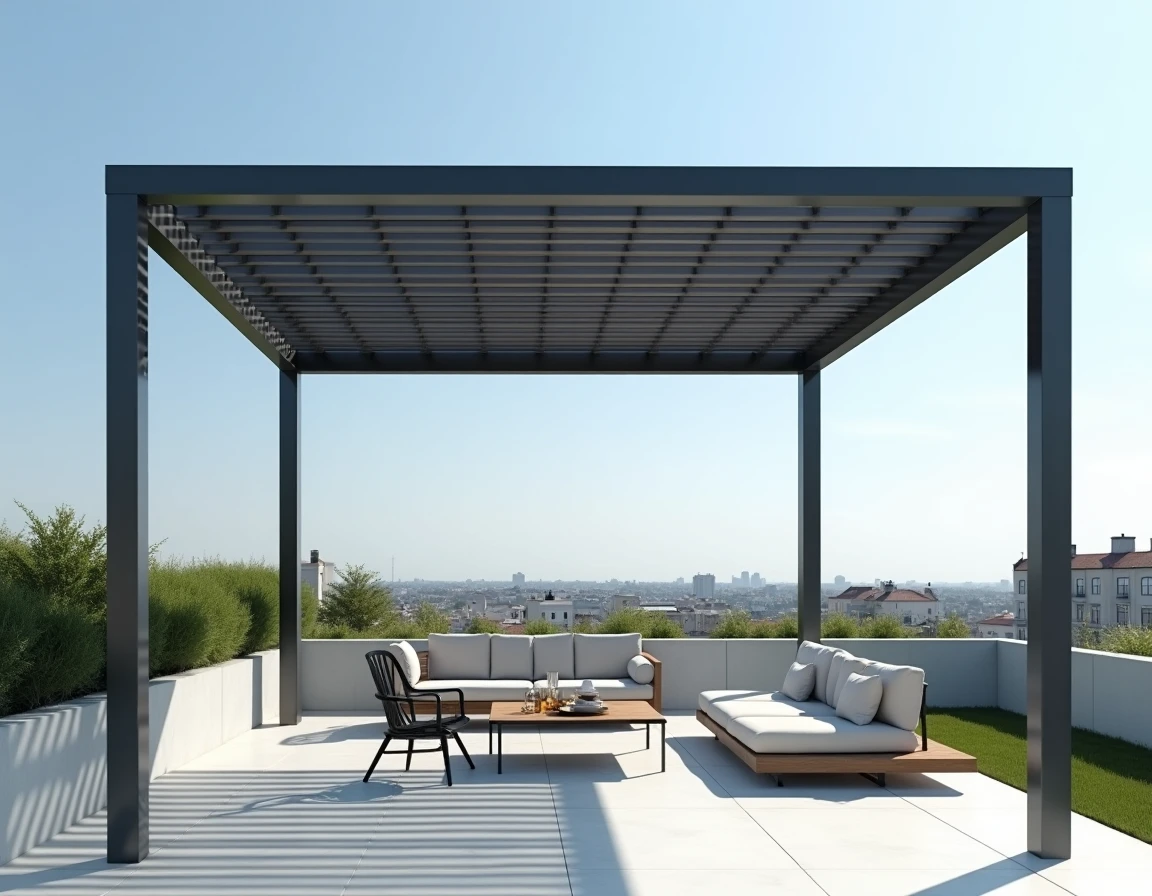
A pergola with adjustable slats allows real-time adjustment of the obscuration angle. When the slats are closed, it forms an opaque roof that eliminates any descending visibility. When tilted, it lets in low-angle light while deflecting vertical sightlines.
The orientation of the slats can be adjusted to the exact degree, either manually or via motorization. This modularity makes it superior to fixed structures when the neighbor’s line of sight varies according to the floor or distance.
3. Sliding louvered screen
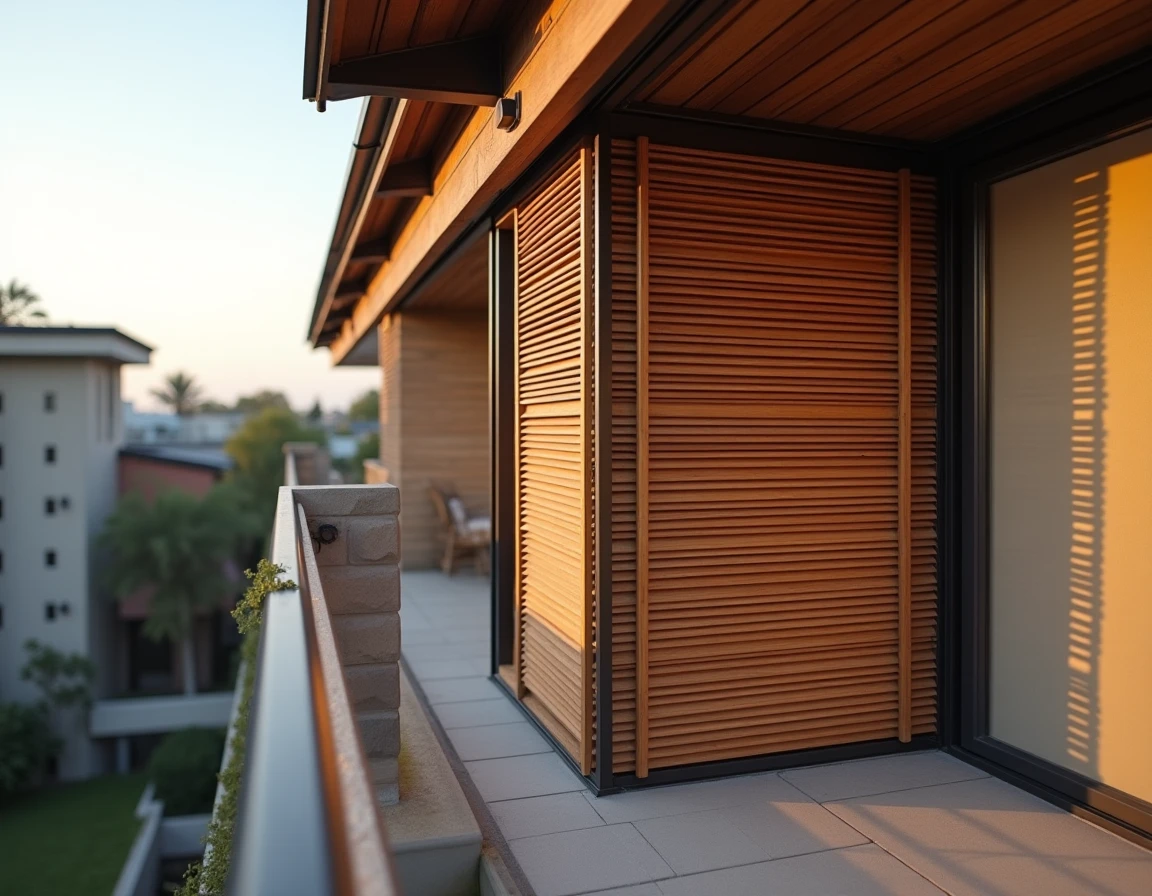
The sliding louvered screen functions like a mobile vertical shutter. Mounted on a rail, it slides to open or close a section of balcony or terrace as needed. The fixed or adjustable slats of the screen deflect the descending gaze without obstructing ventilation.
Made of powder-coated aluminum, it withstands the elements without maintenance. Its reduced thickness makes it compatible with narrow balconies where a projecting blind would be cumbersome.
4. Angled shade sail in high position
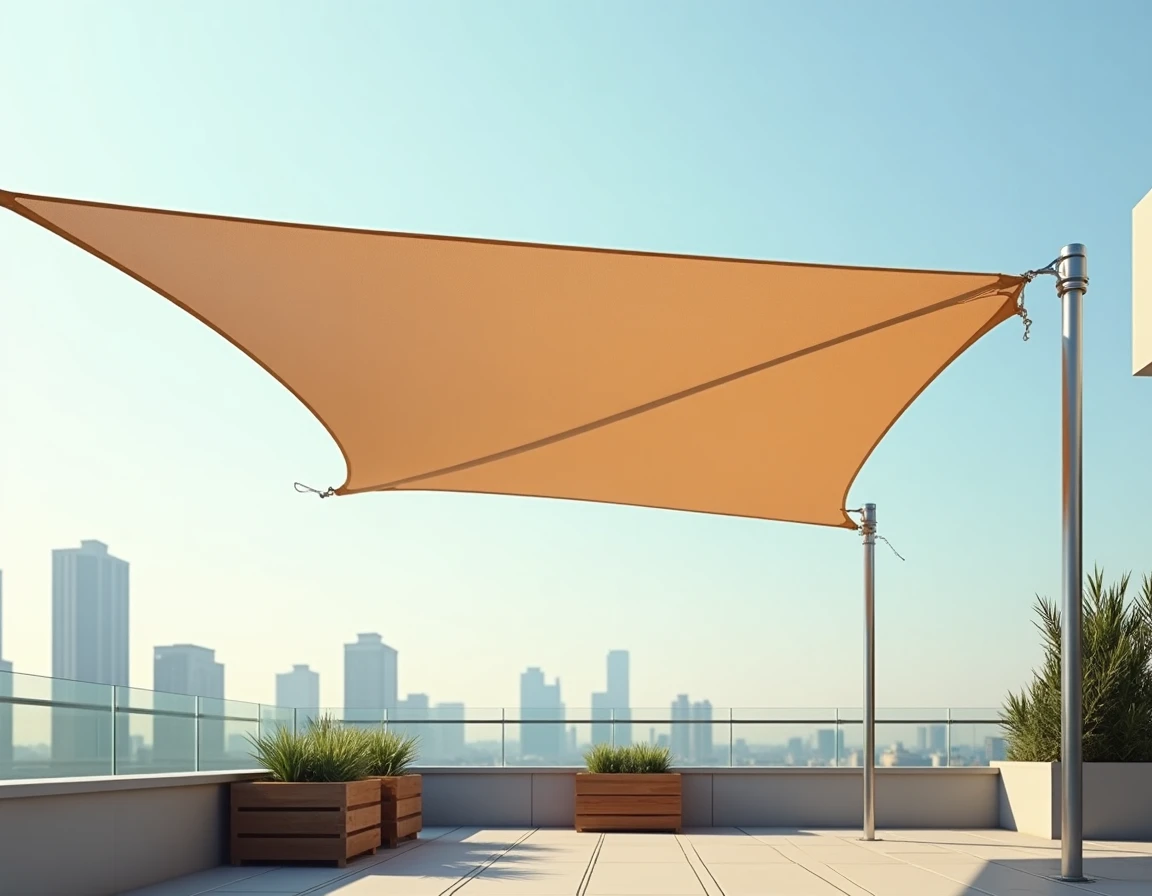
Tensioned diagonally between a high point on the facade and a mast or tree, the shade sail intercepts the descending gaze while maintaining lateral openness. We observe that its effectiveness directly depends on the angle of inclination and the height of the attachment points.
The fabric must have a sufficiently dense weight to block the view. Models that are too light allow silhouettes to be seen in backlight, which negates the obscuring effect.
5. Vertical privacy screen on tensioned cables with climbing plants
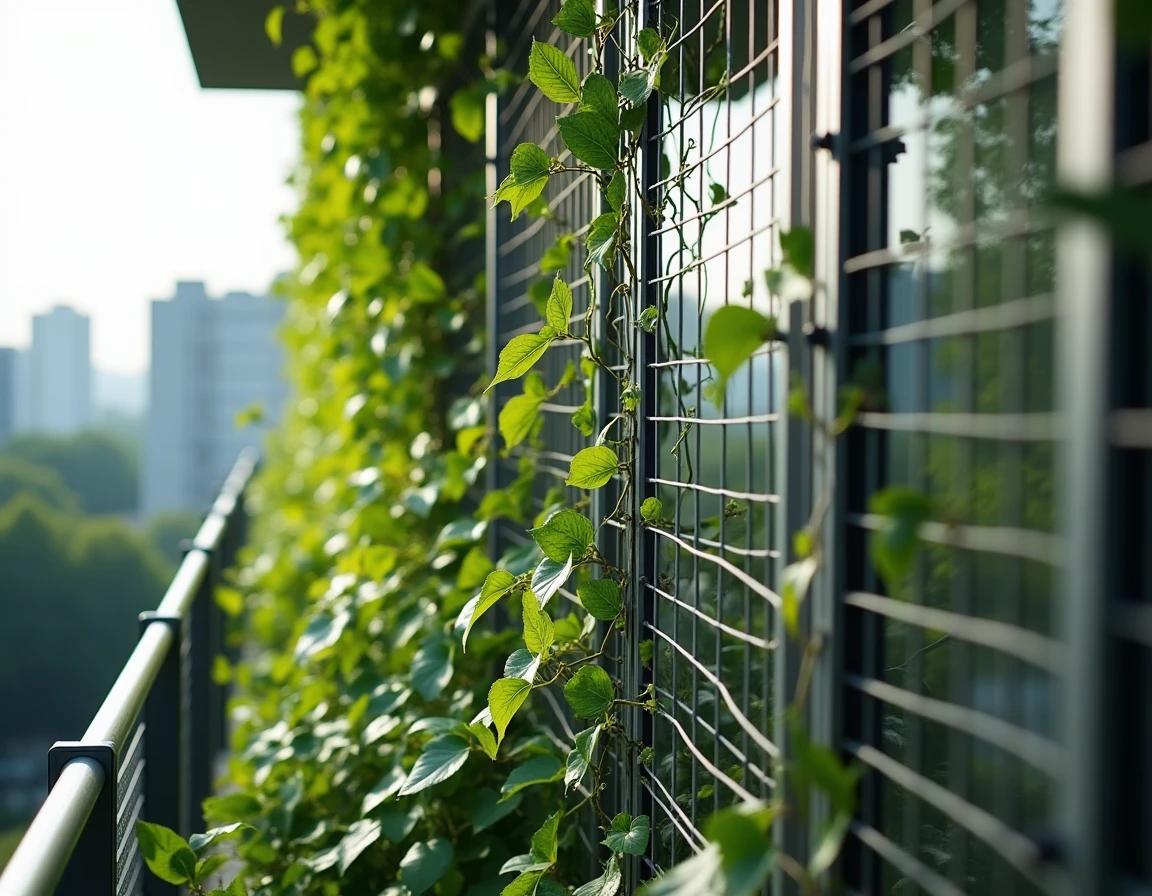
Tensioned stainless steel cables run vertically between a guardrail and an awning to support persistent climbing plants (star jasmine, trachelospermum, ivy). The foliage creates a living screen that filters the gaze without rigidifying the space.
This device requires patience and maintenance: regular pruning, watering, and replacement of failing plants. In return, it offers partial sound insulation and a cooler microclimate in summer.
6. Perforated composite panel at height
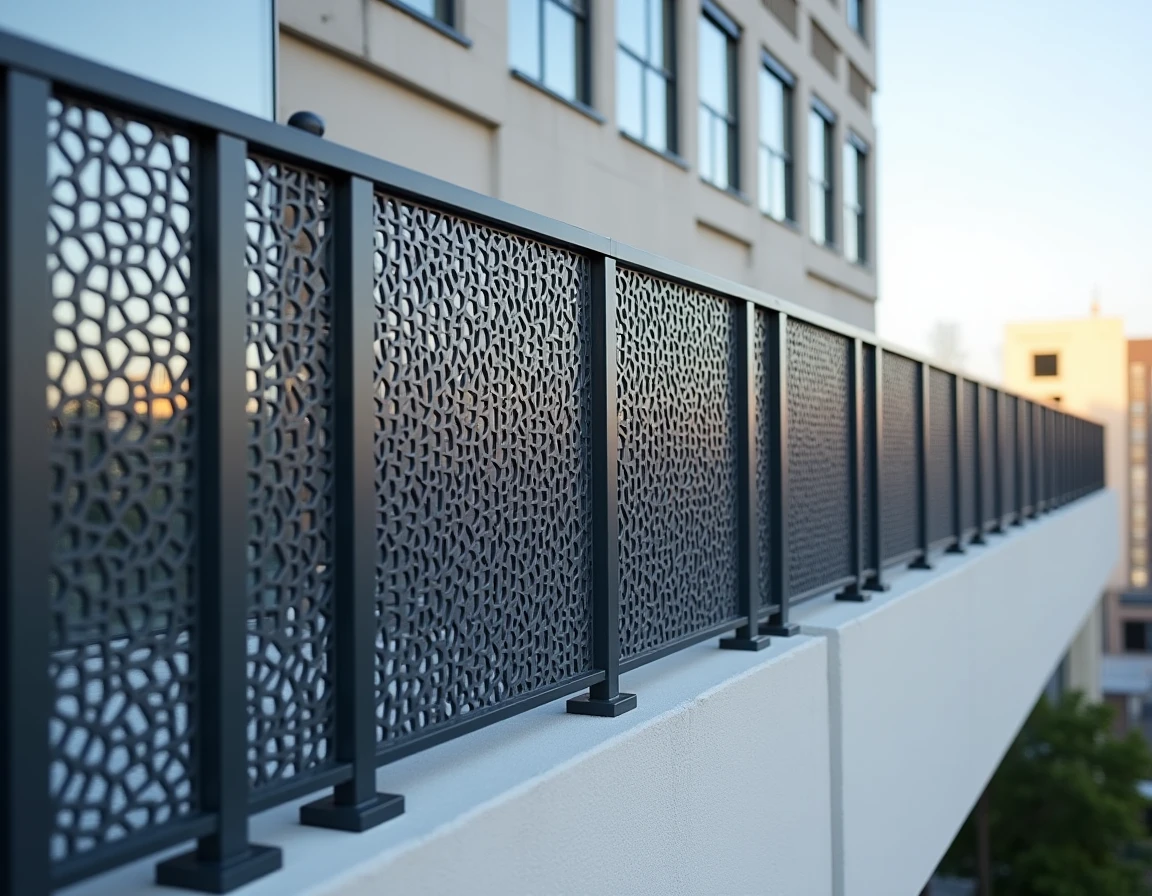
Installed elevated on an existing wall, the perforated composite panel adds the missing height to block a descending visibility. The total height (wall plus panel) should reach at least about 1.80 m for effective obscuration when seated.
The perforated patterns (horizontal slats, geometric cutouts) preserve air circulation and avoid the “wall” effect. The wood-polymer composite does not gray or crack, unlike untreated natural wood.
7. Retractable double-sided lateral blind
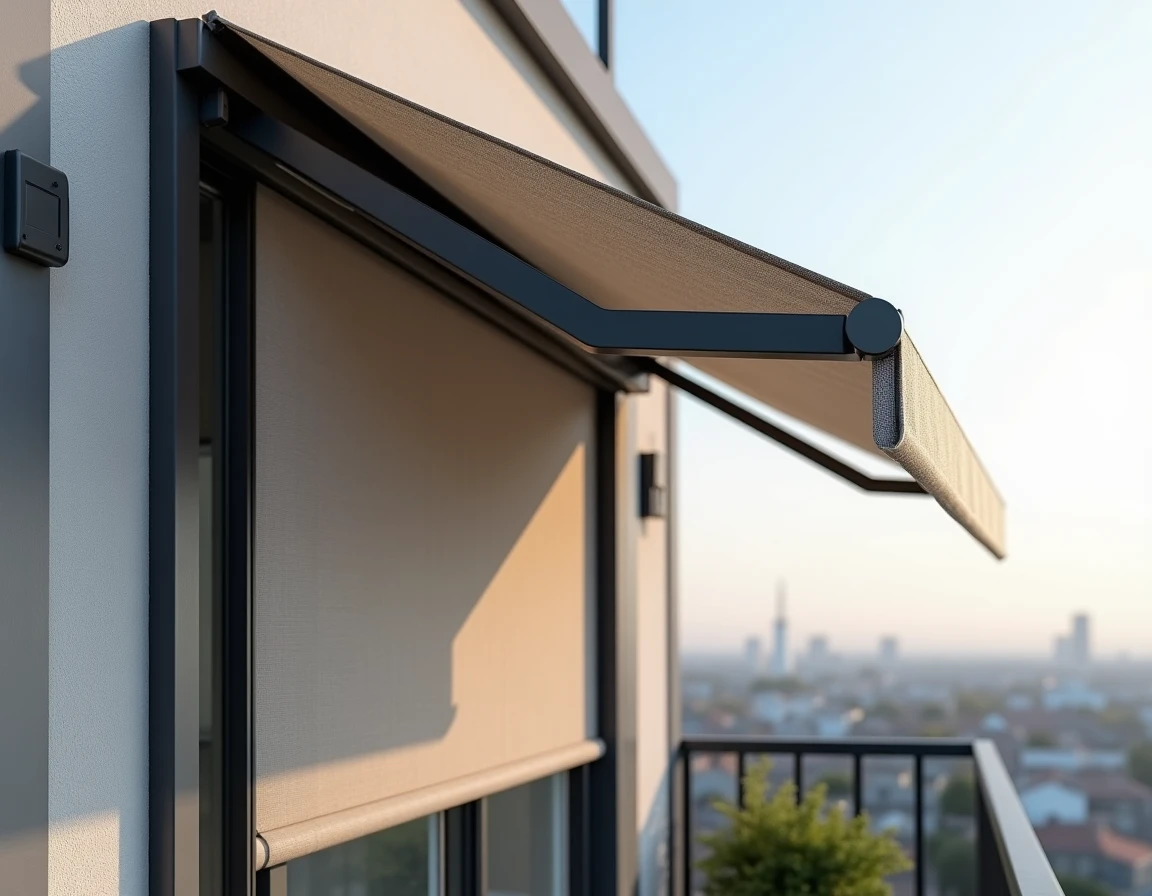
The retractable lateral blind extends horizontally from a box fixed to the wall. In double-sided version, two fabrics extend in opposite directions to cover a larger width. It blocks an oblique or semi-descending gaze coming from an offset neighboring balcony.
Its limitation: it does not protect against strictly vertical visibility. It therefore complements a pergola or shade sail rather than replacing them.
8. Micro-perforated adhesive film on glazing
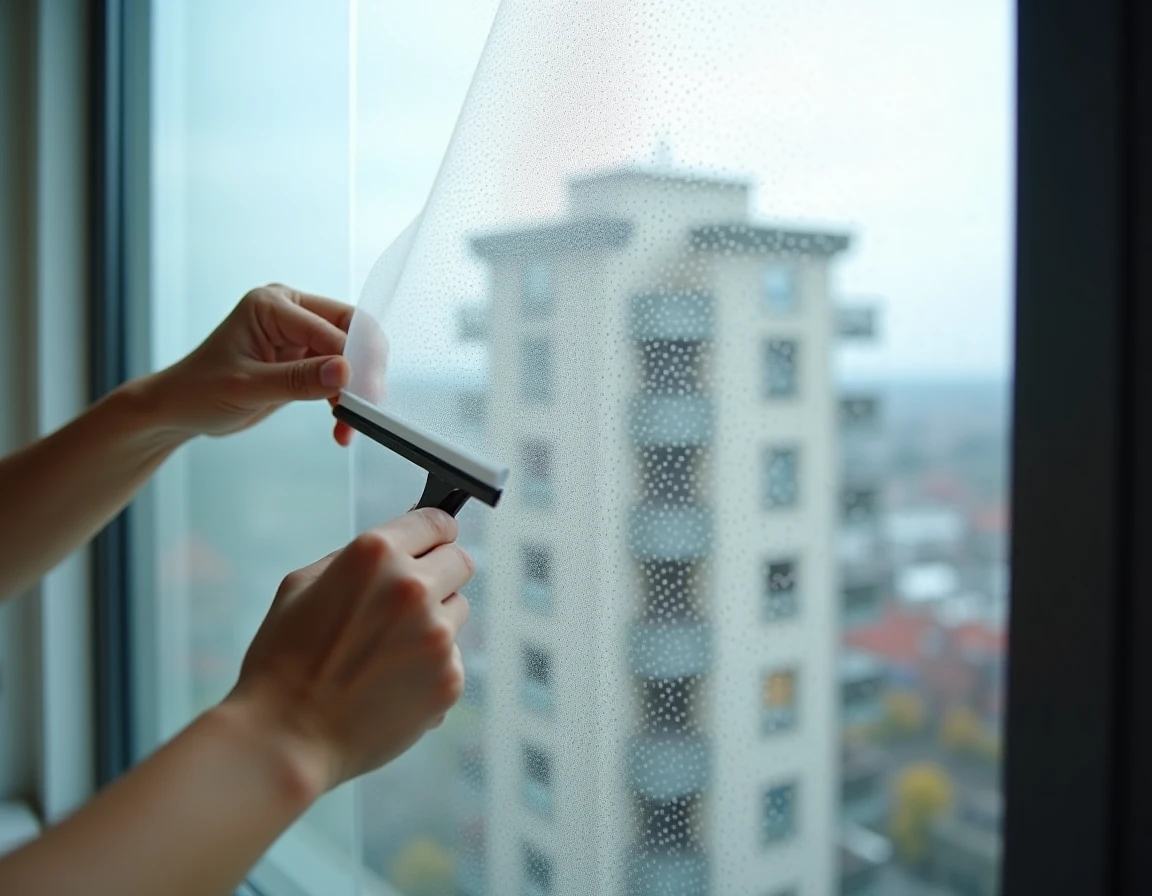
Applied to the outside of the glazing, the micro-perforated film exploits the difference in brightness between inside and outside to render the room opaque from outside. The mirror effect only works when the outside is brighter than the inside.
In the evening, with lights on, the protection reverses. We recommend pairing this film with an interior blind to cover nighttime hours. The film can be applied without specific tools and removed without residue on most glazing.
9. High-density synthetic reed on elevated structure
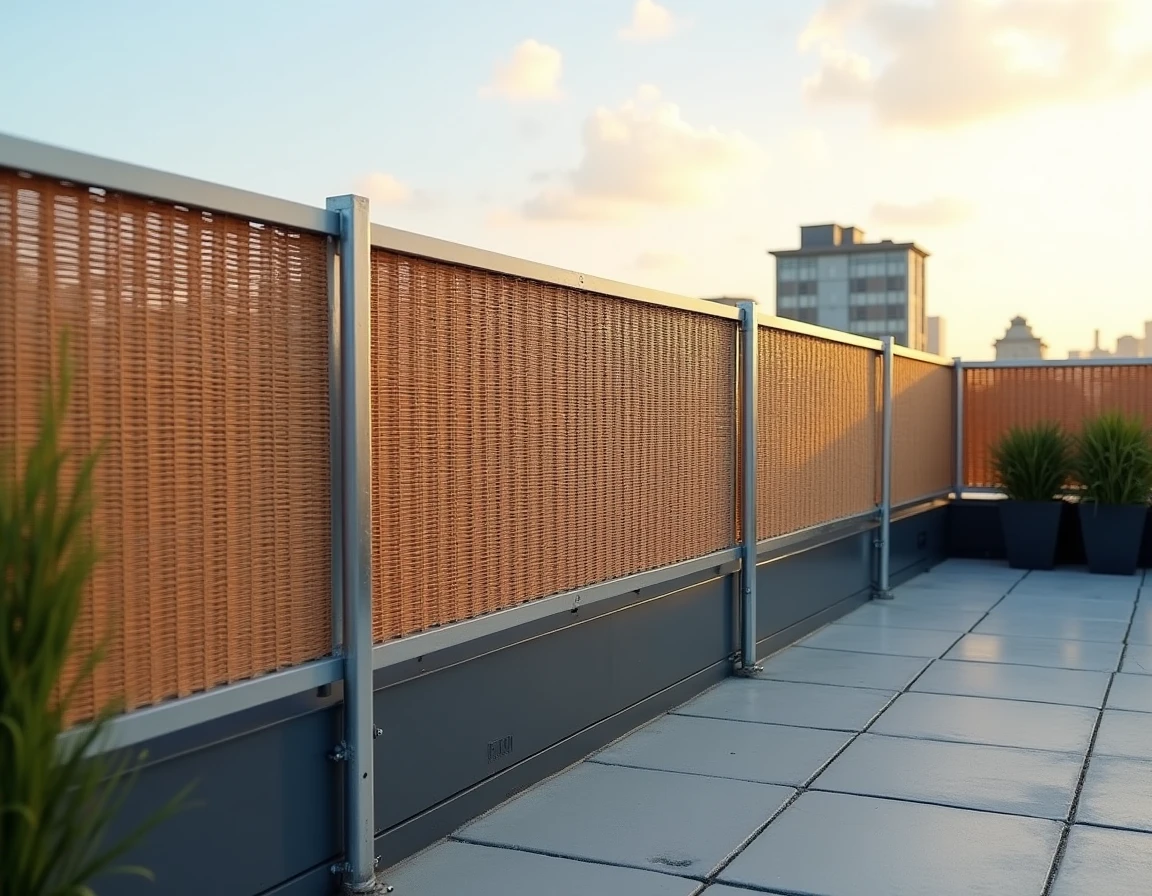
The synthetic reed made of PVC or polyethylene, fixed to a metal structure extending above the guardrail, offers an economical and quick-to-install privacy screen. To counter a descending gaze, the reed must rise well above the line of sight, which requires a rigid frame.
- Choose a high obscuration rate (tight strands, double layer) to avoid visible gaps in backlighting
- Secure the frame with bolted plates to the ground or wall, not just tied to the guardrail
- Check compliance with the condominium regulations, which may limit the height or type of material allowed
10. Raised planter hedge with evergreen shrubs

Brick or fiber planters placed at the edge of the terrace, filled with evergreen shrubs (photinia, eleagnus, laurel), create a gradually rising green screen. The elevation of the planter compensates for the initial low height of the plants.
Weight is the limiting factor: a sufficiently sized planted planter can exceed several hundred kilos. On a balcony, the allowable load of the slab must be verified by a professional before installation.
Each configuration of descending visibility calls for a combination of devices rather than a single solution. A zip screen addresses the frontal descending gaze, a pergola covers the terrace, and a sliding screen closes the sides. The actual effectiveness depends on the angle of incidence of the gaze, which varies according to the distance and level difference between the two residences.